

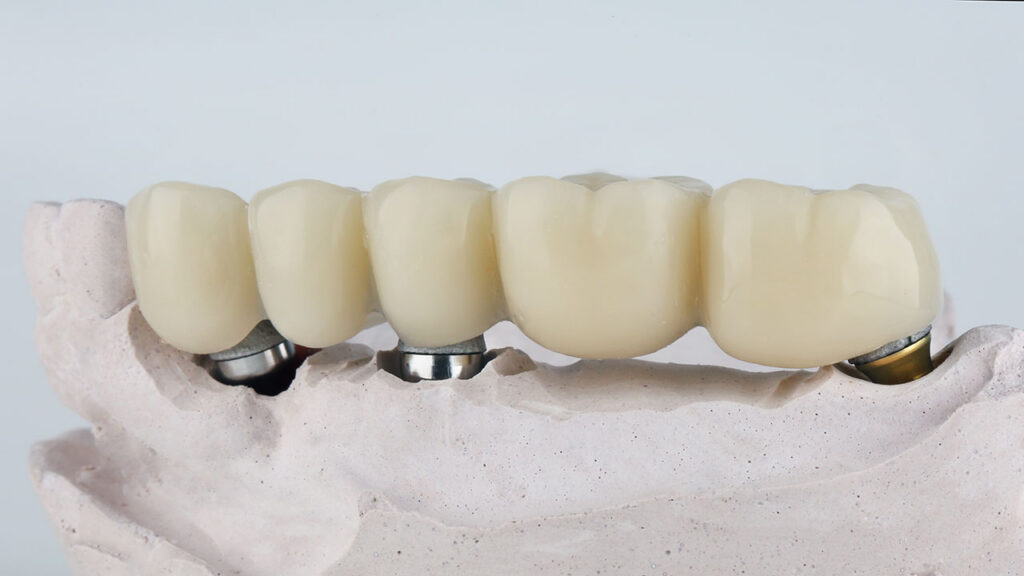
When several teeth are missing in a row, the space can affect much more than the way a smile looks. It can change how food is chewed, how the bite comes together, and how nearby teeth share pressure. For patients looking for a secure replacement that does not depend on removable appliances, Implant Bridges in Plantation, FL can offer a stable and natural-looking solution.
Implant Bridges are designed to replace multiple missing teeth by attaching a custom bridge to dental implants. Instead of resting on the gums or using nearby natural teeth as the main support, the bridge is anchored in the jawbone through implant posts. At Sapphire Periodontics and Implant Dentistry, this treatment is planned to support comfort, chewing strength, and long-term oral health.
How Implant Bridges Work
An implant bridge is a fixed restoration that replaces two or more missing teeth. The bridge includes artificial teeth that fill the open space. Dental implants are placed in the jawbone to support the bridge. Once the implants heal and become stable, the final bridge is attached.
This design is different from a traditional dental bridge. A traditional bridge often uses crowns on the natural teeth beside the gap. Those neighboring teeth must be reshaped to hold the bridge. Implant Bridges do not need to rely on nearby teeth in the same way. The implants serve as the support system.
This can be a major advantage when the teeth around the gap are healthy. By using implants, the surrounding teeth may be left untouched. The bridge is supported by the jawbone, which can help create a strong bite and a secure feel.
Implant Bridges can replace teeth in different areas of the mouth. They may be used in the front of the smile, where appearance is very important, or in the back of the mouth, where chewing force is stronger. The treatment plan depends on bone support, gum health, bite balance, and the number of missing teeth.
Why Replacing Several Missing Teeth Matters
A gap from missing teeth can create slow changes in the mouth. Nearby teeth may tilt toward the space. Opposing teeth may shift because there is no tooth to meet them during biting. These changes can make the bite uneven and may create extra stress on other teeth.
Chewing can also become less efficient. Patients may begin chewing mostly on one side, which can overload those teeth and jaw muscles. Over time, this may lead to wear, soreness, or bite problems.
Missing teeth also affect the jawbone. When tooth roots are gone, the bone in that area no longer receives the same stimulation from chewing. The bone may begin to shrink. Implant Bridges help address this because the implants act like replacement roots and stimulate the bone when the patient bites and chews.
Replacing several missing teeth can also support speech and facial shape. Teeth help guide the tongue when forming words, and they help support the cheeks and lips. An implant bridge can restore structure in a way that feels more natural than leaving the space open.
Benefits of Implant Bridges
- Replaces multiple teeth with one stable restoration: Implant Bridges can fill a larger gap without using a separate implant for every missing tooth.
- Protects nearby natural teeth: Because the bridge is supported by implants, healthy neighboring teeth may not need to be reshaped.
- Supports stronger chewing: Implant support can help restore bite strength and make meals feel more comfortable.
- Helps preserve jawbone: The implants stimulate the bone in the area where teeth were lost.
- Feels fixed and secure: Implant Bridges stay in place and do not need to be removed at night.
- Blends with the smile: The bridge is custom made to match the shape, size, and color of nearby teeth.
- Can improve long-term bite balance: Replacing missing teeth helps reduce shifting and uneven pressure.
What to Expect During the Implant Bridge Process
The process begins with a consultation and detailed exam. Dr. Desai checks the gums, bone, remaining teeth, and bite. Imaging may be used to evaluate the jawbone and plan implant placement. This step is important because the implants must be placed where they can provide strong support for the final bridge.
If gum disease is present, it may need to be managed before implant placement. Healthy gum tissue and stable bone are important for long-term implant success. If teeth need to be removed first, extraction planning may be part of the treatment. If bone has been lost, grafting may be discussed.
Once the foundation is ready, the implants are placed. The area is numbed for comfort, and sedation options may be available for patients who feel anxious. The implants then need time to heal and bond with the bone. This healing period helps create the strength needed to support the bridge.
After healing, impressions or digital records are taken for the final restoration. The bridge is made to fit the bite and match the smile. When it is attached, the fit, comfort, and bite are checked carefully. The goal is a bridge that feels secure, looks natural, and works well during chewing.
How Implant Bridges Compare With Removable Partial Dentures
Removable partial dentures can replace missing teeth, and they may be a good choice for some patients. However, they can sometimes move during meals, place pressure on the gums, or use clasps that attach to remaining teeth. Some patients also dislike removing the appliance for cleaning or sleep.
Implant Bridges are fixed. They stay in the mouth and are supported by implants. This can make them feel more like natural teeth during daily life. Patients do not have to worry about taking the bridge out, and there is no denture plate resting across the gums.
Another difference is bone stimulation. Removable partial dentures rest on the gums and do not replace tooth roots. Implant Bridges use implant posts in the jawbone, which helps support the bone in the treated area.
The right option depends on the patient’s goals, health, bone support, and budget. A consultation helps make the differences clear without pressure.
Caring for Implant Bridges
Implant Bridges need daily care. Even though the bridge is not made of natural teeth, plaque can still collect around the gums and implants. Patients may need floss threaders, special brushes, or a water flosser to clean under and around the bridge.
Regular maintenance visits are essential. During these visits, the dental team checks the implants, gums, bone levels, and bite. Small concerns are easier to manage when they are found early.
Patients should avoid chewing hard objects such as ice or pens. If grinding or clenching is a concern, a protective nightguard may be recommended. With steady care and maintenance, Implant Bridges can provide durable support for daily chewing and smiling.
A Stable Solution for a Larger Gap
Implant Bridges can be a strong option for patients missing several teeth in a row. They help restore chewing, protect nearby teeth, support the jawbone, and provide a fixed restoration that feels secure. For many patients, this treatment offers a practical way to rebuild the smile without relying on a removable appliance.
If you are missing multiple teeth and want to learn whether Implant Bridges are right for you, contact Sapphire Periodontics and Implant Dentistry in Plantation, FL at (954) 797-6866 to book an appointment with Dr. Desai.